
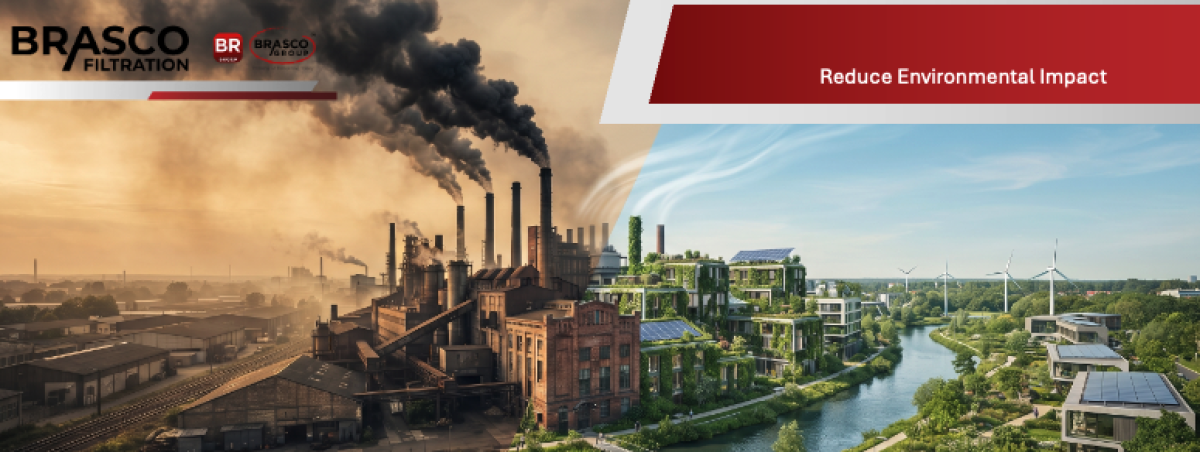
Environmental Impact, The benefits of proper filtration and filtration maintenance
Why “Just Change the Bag” Is the Most Expensive Sentence in Industrial Filtration
Somewhere on your plant right now, a dust collector is running. Nobody’s watching it closely. It’s been doing its job quietly for years, and as far as anyone can tell, it still is. Then one morning, the differential pressure alarm won’t stop, production stalls, and a specialist gets called in to explain what went wrong.
Almost every time, the answer is the same: something small was ignored for months, and it stopped being small.
That’s the pattern industrial filtration teams see over and over. A bag gets swapped when it fails instead of before it fails. A pressure reading gets noted but never compared against last month’s. A process change upstream, a new raw material, a tweaked production rate, quietly starts stressing a filtration system that was never told about the change. None of these are dramatic on their own. Together, they’re how a functioning dust collector turns into a shutdown.
This article isn’t about convincing you that filtration matters , if dust, fumes, or airborne particulate are part of your process, you already know that. It’s about the part most plants get wrong: treating filtration as equipment you install once, rather than a system you maintain continuously.
What “Proper Filtration” Actually Means
Proper filtration isn’t just having a dust collector bolted to the side of your building. It’s having a system sized correctly for your actual dust load, fitted with the right filter media for your specific particulate, and running at the airflow and pressure it was engineered for.
Get any one of those wrong and the system can look like it’s working while it quietly underperforms. A collector pulling less airflow than it should won’t throw an obvious error , it’ll just let more dust escape into the plant than anyone realizes, until an air quality audit or a health complaint brings it to light.
This is why filtration has to be thought of at the process level, not the equipment level. A reverse pulse cartridge system, for example, can be engineered to capture particulate down to 0.3 microns at efficiency rates above 99.99% , genuinely clean output. But that number only holds if the system is specified correctly for the application and kept in the condition it was designed to run in. The engineering gets you the ceiling. Maintenance is what keeps you near it.
The Real Cost of Letting Filtration Slide
Production Losses You Don’t See Coming
A clogged or failing filtration system doesn’t usually announce itself with a bang. It shows up as a fan working harder than it should, a pressure differential that’s crept upward for weeks, or a production line that has to slow down because the extraction can’t keep pace with the dust being generated. By the time it’s obvious, you’re not looking at a quick fix , you’re looking at unplanned downtime while a system gets pulled apart to find out what actually failed.
Compliance Exposure That Doesn’t Wait for a Convenient Moment
Environmental and workplace air quality regulations don’t grade on effort. A system that was compliant on installation day but has drifted out of spec through wear, blocked bags, or unaddressed process changes is still non-compliant , and it’s the version an inspector or auditor will find. For plants in mining, cement, food processing, or any other dust-intensive sector, that’s not a paperwork problem. It’s a production-halting one.
The Cost That’s Easy to Underweight: People
Airborne dust and fume exposure is a health and safety issue before it’s anything else. Every other cost on this list is recoverable , lost production can be made up, fines can be paid, equipment can be replaced. The cost of prolonged exposure to particulate a failing filtration system should have captured is not something you get to undo. That’s reason enough on its own to take maintenance seriously, independent of every commercial argument around it.
Why “Just Change the Bag” Isn’t Maintenance
There’s a common assumption on plant floors that filtration maintenance means swapping bags or cartridges when they wear out, and that’s the whole job. It isn’t, and treating it that way is how avoidable failures keep happening.
Industrial dust control equipment doesn’t operate in isolation , it’s tied directly to whatever process is generating the dust or fume in the first place. Change your input material, adjust your production rate, or modify an upstream process, and you’ve changed the load your filtration system has to handle, whether anyone updated the maintenance plan to reflect that or not. A new bag doesn’t fix a system that’s being asked to do a fundamentally different job than the one it was designed for. Specialists who work on filtration full-time will tell you this is the call they get most often: a plant assumes a fresh filter will solve a problem that’s actually rooted somewhere upstream in the process itself.
Real maintenance means understanding the process behind the equipment, not just the equipment itself.
What Proper Filtration Maintenance Actually Looks Like
A Cadence, Not a Callout
Effective maintenance runs on a schedule, not a crisis. Weekly or monthly inspections , the right interval depends on your process and duty cycle , check the things that predict failure before it happens: differential pressure across the filter media, bearing and motor temperatures, pulse cleaning performance, and fan flow discharge. None of these individually tells you much. Tracked consistently over time, they tell you almost everything.
Data You Can Actually Act On
Here’s the part that changes how a plant relates to its own filtration system: when those readings get logged and plotted over weeks and months instead of glanced at and forgotten, they stop being a checklist and start being a trend line. A pressure reading that’s fine in isolation but has been climbing steadily for six weeks is a warning most single-point inspections would miss entirely. It’s the same logic as tracking blood pressure over years rather than taking it once and calling it healthy , one reading tells you a moment, a history tells you a direction. Maintenance programs that retain readings across dozens of inspection cycles are what let a plant catch a slow drift before it becomes a Tuesday-morning shutdown.
People Who Understand the Whole Picture
Filtration maintenance is a specialist discipline, not a general facilities task. It takes someone who understands both the mechanical side of the equipment and the process it’s protecting , because, as covered above, most real problems live at that intersection. That’s also why maintenance and equipment design benefit from sitting under one roof: the people servicing your system are the same people who understand how it was built to perform, which means fewer guesses and faster, more accurate diagnoses when something does go wrong.
Filtration Maintenance Doesn’t Look the Same Across Every Plant
The core discipline is the same everywhere , inspect, track, act before failure , but what that looks like on the ground shifts depending on what your plant actually does.
Mining and Cement
These are the environments where dust loads are heaviest and the consequences of a lapse are most immediate. Reverse pulse cartridge systems handling fine particulate in a crushing or milling operation are doing serious work , the kind that can hold efficiency rates above 99.99% at sub-micron particle sizes when properly maintained. But that same intensity means wear happens faster, pulse valves and diaphragms take more punishment, and the gap between “due for inspection” and “overdue for inspection” closes quickly. In these settings, maintenance intervals tend to sit at the shorter end of what’s normal, and a permanent on-site service arrangement , rather than periodic call-outs , is often the more practical model.
Food Processing
Here the concern isn’t just particulate escaping into the plant, it’s contamination risk and the compliance standards that come with handling consumable products. Filtration systems in this space have to be maintained with the same rigor as any other food-safety-critical equipment, with inspection records that can stand up to an audit, not just internal peace of mind.
Energy, Manufacturing, and Specialised Enclosures
Not every filtration application is about capturing dust from a production process. Pressurisation units protecting substations, compressor rooms, and server or equipment enclosures serve a different purpose , keeping contaminants and, in some designs, heat out of sensitive environments. These systems fail quietly in a different way: instead of visible dust buildup, you get electrical overload risk or equipment tripping from temperature stress that traces back to a filtration or cooling issue nobody connected to the actual root cause. Maintenance here is less about pressure differentials and more about consistent airflow and temperature regulation holding steady over time.
The common thread across all of these is that generic maintenance doesn’t work. A schedule built for a cement crusher isn’t the right schedule for a substation enclosure, and treating them the same is how gaps open up.
What You Get When Filtration Is Done Right
A well-maintained filtration system is, in a strange way, boring , and that’s exactly the point. Inspections turn up nothing alarming. Pressure readings sit in the expected range, month after month. Filter media lasts as long as it’s supposed to instead of failing early under stress it was never designed for. Production doesn’t get interrupted by an emergency no one saw coming.
That translates directly into cost. Filters that run their full service life instead of failing prematurely cost less to replace and less often. Systems operating at correct airflow use energy more efficiently. A plant that isn’t fighting compliance issues after the fact isn’t paying for the downtime, remediation, and reputational cost that comes with it. And a workforce breathing genuinely clean air is a workforce that isn’t carrying a health risk your plant put there.
None of that requires new equipment or a bigger budget. It requires a maintenance program that’s actually followed, on a system that was specified correctly to begin with.
Built to Last: Why the System Itself Still Matters
Maintenance can only do so much for a system that was undersized, poorly specified, or built from parts that don’t hold up under real operating conditions. This is where the design side and the maintenance side of filtration have to work together rather than as separate conversations.
Locally manufactured filter bags, cages, and cartridges , built and stocked close to where they’re installed , mean a plant isn’t waiting weeks on an import shipment when a component needs replacing. And a filtration provider that both engineers systems and services them in the field brings a kind of institutional memory that outside contractors can’t: they’ve seen how a specific design ages, what tends to wear first, and what a normal reading looks like for that exact configuration.
That combination , the right system, backed by a maintenance program built specifically for it , is what actually protects the investment a plant has already made in clean air.
There’s also a practical argument for choosing a provider who does both design and maintenance under one roof: accountability. When the same organisation engineers the system, manufactures its components locally, and services it in the field, there’s no finger-pointing between “the people who built it” and “the people who maintain it” when something needs attention. A service team that also happens to have deep filtration engineering expertise behind it can tell the difference between normal wear and a symptom of a deeper design or process issue , and knows which one they’re looking at faster than a generalist contractor would.
This matters just as much when the system in question wasn’t originally built by the provider now maintaining it. Plants change hands, equipment gets inherited from a previous project, or a system was specified by someone who’s no longer around to explain the reasoning behind it. A maintenance partner capable of servicing, refurbishing, and upgrading filtration equipment regardless of who originally built it means a plant isn’t locked into a single OEM relationship just to keep its air quality compliant.
Getting Started With a Maintenance Partner You Can Trust
If your filtration maintenance currently means “we replace things when they break,” you’re not alone , it’s the default a lot of plants drift into simply because nobody assigned filtration a proper maintenance owner. The fix isn’t complicated. It starts with a proper inspection of your current system to understand its actual condition, followed by a maintenance plan built around your specific process and duty cycle, not a generic template.
Brasco Filtration has serviced and maintained filtration systems for some of Africa’s largest industrial operations, with over 300 systems installed and a service division backed by more than 150 years of combined technical expertise across mining, cement, energy, food processing, and manufacturing. Whether the system in question is one Brasco built or one supplied by another manufacturer, the same disciplined inspection and maintenance approach applies: track the data, understand the process, and catch the drift before it becomes a shutdown.
If it’s been a while since anyone looked closely at your filtration system’s actual performance history, that’s the place to start.
Frequently Asked Questions
How often should an industrial filtration system be inspected?
It depends on your dust load and duty cycle, but most industrial systems benefit from weekly or monthly inspections at minimum. High-dust environments like cement or mining operations often warrant the more frequent end of that range, since pressure and wear can shift faster under heavy particulate loads.
What’s actually checked during a filtration maintenance inspection?
A proper inspection covers differential pressure across the filter media, bearing and motor temperatures, pulse cleaning performance, and fan flow discharge, along with a visual check of bags, cartridges, and cages for wear or damage. These readings are typically logged over time rather than assessed as one-off snapshots.
Can I just replace filter bags when they wear out instead of following a maintenance schedule?
You can, but it usually costs more in the long run. Reactive bag changes tend to happen after a system has already been underperforming for a while, which means lost efficiency, higher energy use, and sometimes damage to other components that a scheduled inspection would have caught earlier.
Does a process change on the plant floor actually affect filtration maintenance needs?
Yes, more than most teams expect. A new raw material, a different production rate, or an upstream process change can shift the dust load a filtration system has to handle. When that happens without an update to the maintenance plan, the system ends up working outside the conditions it was designed for.
What happens if industrial filtration isn’t properly maintained?
Left unaddressed, it typically shows up as declining airflow, rising energy costs, more frequent unplanned downtime, and eventually non-compliance with air quality regulations. It also raises the health and safety risk for anyone working near the affected area, since a degraded system is capturing less particulate than it’s meant to.